 Comunications
News
SELA and EIIS publish a report on technology diplomacy and digital sovereignty for Latin America and the Caribbean
Comunications
News
SELA and EIIS publish a report on technology diplomacy and digital sovereignty for Latin America and the Caribbean
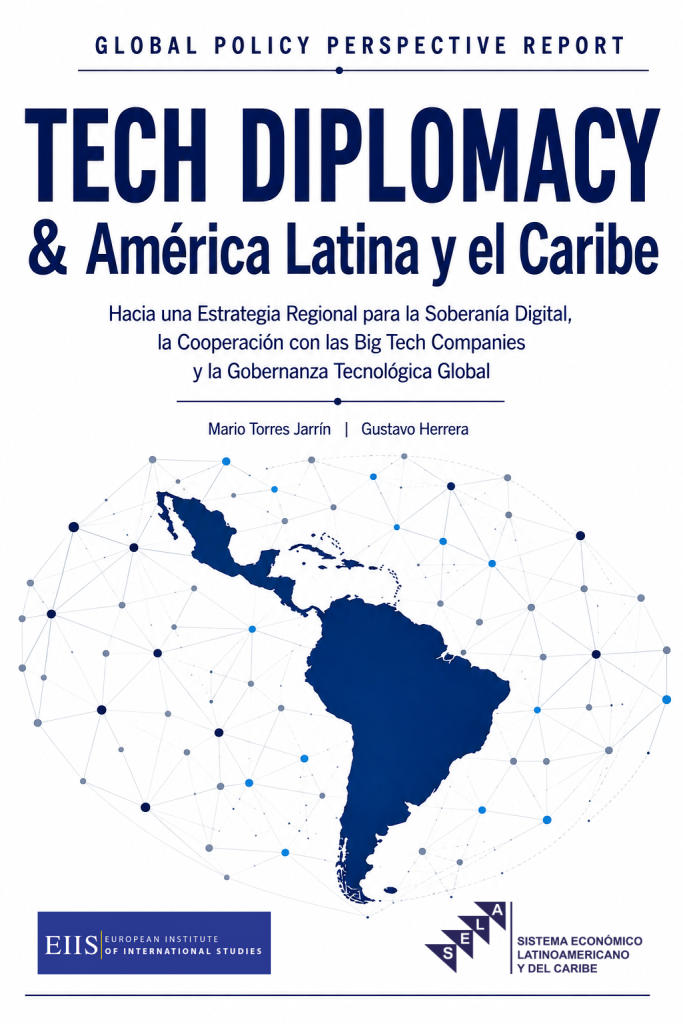
The Latin American and Caribbean Economic System (SELA), in collaboration with the European Institute of International Studies (EIIS), published the Global Policy Perspective Report: Tech Diplomacy & Latin America and the Caribbean “Towards a Regional Strategy for Digital Sovereignty, Cooperation with Big Tech Companies and Global Technology Governance.”
The report argues that the rapid disruption brought about by artificial intelligence, advanced computing and the data economy has made technology a structural pillar of geopolitical power, security and foreign policy.
In the foreword to the report, SELA’s Permanent Secretary, Ambassador Lesly David, emphasises that “digital transformation represents an opportunity to strengthen the strategic autonomy of our countries, promote innovation and expand the region’s participation in technology governance processes. This report reaffirms SELA’s commitment to generating applied knowledge and creating forums for regional consultation.”
The document calls for moving beyond the traditional role of mere consumers of technology and advancing towards high value-added partnerships with Big Tech Companies and the world’s leading technology hubs.
The publication proposes the LAC Tech Diplomacy Regional Agenda 2030, which is structured around seven strategic lines of action aimed at strengthening the institutional, technological and diplomatic capacities of Latin America and the Caribbean in the face of the new global technological order:
1- Strengthen regional digital sovereignty and infrastructure.
2- Deepen regional technological integration.
3- Play an active role in global technology governance.
4- Negotiate strategically with Big Tech Companies.
5- Drive innovation and technological development.
6- Promote ethical governance of artificial intelligence.
7- Establish the Permanent Regional Initiative for Training in Tech Diplomacy
Global policy perspective reports are technical and forward-looking documents designed to bridge strategic information gaps in public decision-making. In an international context characterised by rapid geopolitical and technological upheaval, these tools provide the conceptual basis for Member States to adapt their institutional structures to the demands of the digital age.